

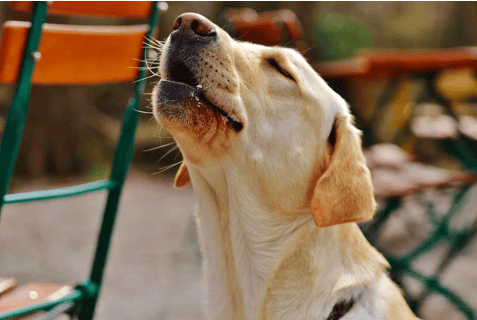
How do I get my dog to stop barking annoyingly?
There are multiple reasons why a dog barks. Dog’s may bark because they’re curious, warning others of danger, prompting you to play and to discipline the young. These forms of barking are short-lived. They talk while playing. They talk to each other—not in English (oh how we wish!) but they do! I bet your Labrador even has his own “voice!” Right?

- Reasons why dogs may bark excessively:
Physical needs
This can mean they’re; hot, cold, hungry, thirsty or lacking in exercise, or even attention. When a dog doesn’t get enough exercise in a day, the energy builds up and can all come out in a burst. This can show through ‘zoomies’ or barking.
Attention seeking
One usual reasoning for a dog barking for attention is because they’re bored. This goes back to the physical needs because dogs can get bored due to lack of exercise, isolation, or lack of mental stimulation. Another attention seeking reason is that the dog has separation anxiety.
Anxiety
Dogs with separation anxiety or any other forms of anxiety tend to bark a lot more due to this. The bark is often high-pitched and can be accompanied by the dog whining. You may see this in a rescue do that my have PTSD from being left alone, or a dog you go second hand that was not taught not to bark. It’s a habit to nip in the bud at 8 weeks old!!!
Fear
Any sort of noise or object that catches the dog’s attention can trigger barking. This is actually normal and I’d hate to yell at them for this.
Territorial
Some dogs bark at people or other dogs when they believe that the other is coming into their territory. The barking tends to get louder when the other gets closer. This is normal, and actually a benefit to humans to want to know if someone is approaching unaware to them.
Greeting
Dogs often happy bark when meeting people or other animals, the bark is usually accompanied by tail wags. This can last for a short period of time and is nothing to worry about—just don’t embellish it or encourage it.

First steps to stopping excessive barking:
First things first, teach your dog to bark on command. It sounds silly that in order to answer the question ‘how to stop a dog from barking’, you might need to teach them to bark initially. However, putting a nuisance behaviour on cue reduces the frequency of that behaviour. Dogs learn behaviours quickly if you can teach them in opposite pairs. Therefore, teaching a dog to bark first is helpful to teach a dog to be quiet. OR…like me, you can use the universal “eh-eh!!!” (and divert their attention) when this comes up. You can try this method if you like.
Step 1:
Set the environment where your dog is most likely to bark, likewise use/do something that will prompt your dog to bark. When they bark, praise and then give a treat. Remove all other animals and people from environment to set the stage for concentrated training.
Step 2:
After a series of repetitions, wait quietly for your dog to bark without being prompted. Once again, praise and give a treat each time.
Step 3:
After hearing your dog bark all those times, you may have noticed your dog has a range of barks, start to only praise for the bark that you prefer. They may sound like they mean different things! A “talky”sounding bark is all I’ll tolerate and my dogs know it and speak with me accordingly!
Step 4:
Next is to add a cue, a gesture or a word. A couple of examples are ‘speak’ and ‘talk’. Cue the gesture/word just before your dog begins to bark. Make sure to praise and treat each time with a treat and move onto verbal praise so you won’t need a treat later.
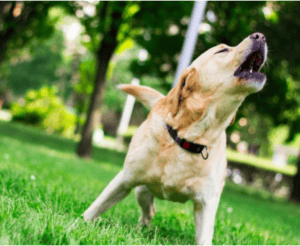
Next is to teach ‘quiet’
One way of training your dog to stop barking is teaching the word ‘quiet’. Or “EH-EH!” This word must be said in a calm, firm voice. This is because any sort of raised voice such as yelling will give your dog the impression that you’re joining in with them, rather than trying to stop them.
Step 1:
Use ‘classical conditioning’ to teach the quiet cue. Give the cue for quiet whether that be the word quiet, or a hand gesture, pause for half a second, and then give a treat or word or praise.
Your dog will soon start to expect a treat after the quiet cue has been shown. Therefore, with classical conditioning, you’re promising to give a treat once you’ve cued ‘quiet, no matter what your dog is doing.
Step 2:
After enough repetitions, you’ll notice your dog will being to eager to wait in silence for a treat. Once this has been shown, you can now move onto operant conditioning to reinforce the behavior.
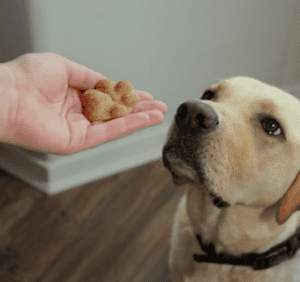
Step 3:
Give the quiet cue and endure a short duration of silence, praise and give a treat for the silence.
Don’t reward your dog barking
Step 1:
Reward your dog for staying quiet instead. The question ‘how to stop a dog from barking?’ does not involve any rocket science and with just a few sensible steps, this can be achieved easily. Just like jumping. Only give a treat if they are on ALL FOURS looking at you!
Step 2:
If your dog barks at mealtimes, ignore the barking and wait for them to stop before feeding them. Similarly, if you dog keeps barking for you to play with them, ignore them until they are quiet. Then pick a toy and invite them to play along. If barking begins, the play stops until it is ‘quiet’ again.
Step 3:
Consistency is the key, just like with child rearing. Giving in and responding to your dog’s barking, even if just the once, is likely to teach them to persist and try even harder. Or it may be near impossible to stop it entirely. To finalize and reinforce both behaviors, use them as a ‘paired cue.’ First cue bark, let your dog bark and then cue quiet, let your dog be silent and then praise and treat. Repeat this a few more times.
(For puppies only work on this 5 minutes, then repeat many many times—their attention span can be short)